

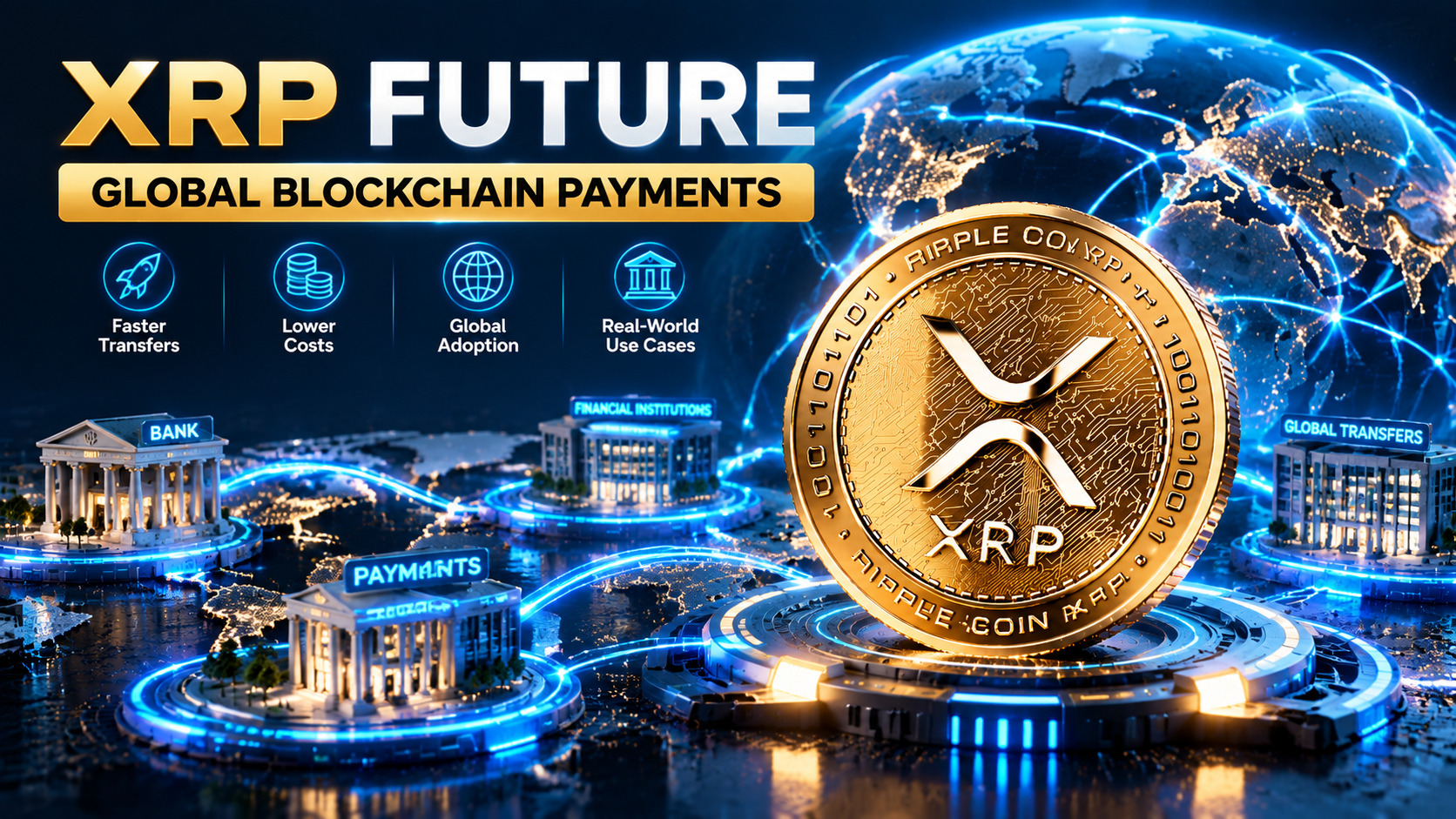
The cryptocurrency market continues to grow as more people and businesses explore blockchain technology. Among thousands of digital assets, XRP (XRP) remains one of the most recognized cryptocurrencies because of its focus on fast transactions, low fees, and global payment solutions.
Many investors are asking: Is XRP a good investment in 2026? Some believe XRP has strong future potential because of its real-world payment use cases and established blockchain network. Others remain cautious due to cryptocurrency volatility, regulatory challenges, and competition from other blockchain projects.
XRP has a unique position in the crypto market because it was designed to solve a specific problem: improving the speed and efficiency of international payments.
In this article, we will explore XRP’s technology, benefits, risks, investment potential, and future outlook in 2026.
Disclaimer: This article is for educational purposes only and does not provide financial advice. Cryptocurrency investments involve risks, and users should conduct their own research before making investment decisions.
What Is XRP (XRP)?
XRP is a digital cryptocurrency that operates on the XRP Ledger (XRPL), a decentralized blockchain network created for fast and efficient financial transactions.
Unlike Bitcoin, which mainly focuses on being a decentralized store of value, XRP was developed with a different purpose: enabling quick and affordable transfers between individuals, businesses, and financial institutions.
The XRP Ledger can process transactions within seconds with very low fees, making it suitable for payment-related applications.
XRP is closely connected with Ripple, a technology company that develops blockchain-based payment solutions. However, XRP and Ripple are separate entities. XRP is the native digital asset of the XRP Ledger and operates independently.
According to the official XRP Ledger documentation, the network is designed to provide fast settlement, scalability, and efficient blockchain-based transactions.
Source: Official XRP Ledger documentation
https://xrpl.org/
How Does XRP Work?
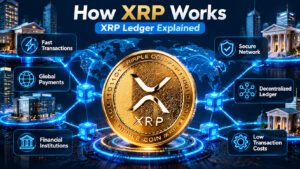
XRP works through the XRP Ledger, which uses a decentralized consensus mechanism instead of traditional cryptocurrency mining.
When a transaction is submitted, independent validators verify and confirm it. This process allows XRP transactions to complete quickly without requiring energy-intensive mining.
Key features of XRP include:
- Fast transaction confirmation
- Low transaction costs
- Energy-efficient blockchain system
- Global payment capabilities
- Decentralized validator network
These features make XRP different from many traditional payment systems that may require multiple intermediaries and longer processing times.
Why Is XRP Popular Among Investors?
XRP has gained popularity because it focuses on solving real-world financial problems.
Traditional international payments often involve:
- Multiple banking intermediaries
- Higher transaction fees
- Longer settlement times
- Limited availability during non-business hours
XRP aims to improve this process by providing a blockchain-based payment system that can transfer value quickly across borders.
Investors who support XRP believe that increased blockchain adoption in the financial sector could create more demand for efficient payment solutions.
Benefits of Investing in XRP in 2026
1. Fast and Low-Cost Transactions
One of the biggest advantages of XRP is transaction speed.
While traditional international transfers may take hours or even days, XRP transactions can settle within seconds.
The low transaction cost also makes XRP attractive for users who need to transfer digital assets efficiently.
Potential use cases include:
- International payments
- Cross-border money transfers
- Financial settlement solutions
- Digital asset transfers
2. Strong Focus on Global Payments
XRP was created with a clear purpose: improving the global payment infrastructure.
Financial institutions require faster and more cost-effective ways to move money around the world. XRP’s technology focuses on providing solutions for these challenges.
If blockchain-based payments continue growing in 2026, XRP could benefit from increased attention and adoption.
3. Established Blockchain Network
One advantage XRP has compared with many newer cryptocurrencies is its long operating history.
The XRP Ledger has been developed and improved over several years, creating a strong technical foundation.
Important XRP Ledger features include:
- Reliable transaction processing
- Low energy consumption
- Support for digital assets
- Decentralized validation
An established network can provide more confidence compared with projects that are still in early development.
4. Growing Interest in Blockchain Payments
The adoption of blockchain technology continues expanding across different industries.
Companies and financial organizations are exploring ways blockchain can improve:
- Payment efficiency
- Transaction transparency
- International transfers
- Digital asset management
Because XRP focuses specifically on payments, some investors believe it could benefit from future growth in blockchain adoption.
5. Potential Institutional Adoption
Institutional interest is an important factor in cryptocurrency growth.
Large financial organizations are increasingly researching blockchain technology to improve existing systems.
XRP’s payment-focused approach may attract attention from businesses looking for faster and more efficient transaction solutions.
However, actual adoption depends on regulatory clarity, business decisions, and market conditions.
Risks of Investing in XRP in 2026
Although XRP has several advantages, investors should also understand the risks before considering it as a potential investment.
Cryptocurrency markets are highly unpredictable, and even established digital assets can experience significant price movements.
1. Cryptocurrency Market Volatility
One of the biggest risks of investing in XRP is cryptocurrency volatility.
The price of XRP can change quickly because of factors such as:
- Market sentiment
- Investor demand
- Economic conditions
- Global cryptocurrency trends
- Regulatory updates
Even if XRP technology continues improving, price performance is never guaranteed.
Investors should understand that cryptocurrencies can experience both rapid growth and major declines.
2. Regulatory Challenges
Regulation remains one of the most important factors affecting XRP’s future.
Governments worldwide are creating new rules for cryptocurrencies and digital assets. These regulations can influence:
- Cryptocurrency adoption
- Exchange availability
- Institutional participation
- Investor confidence
Clear regulations could help increase adoption, while unfavorable policies could create challenges for the market.
3. Competition From Other Blockchain Projects
The blockchain industry is highly competitive.
XRP competes with other networks that are also working on faster payments and financial solutions.
Some competitors focus on:
- Smart contracts
- Decentralized finance (DeFi)
- Cross-border payments
- Enterprise blockchain solutions
For XRP to maintain long-term growth, continued development and adoption will be important.
4. Adoption Risk
A cryptocurrency’s success depends on real-world usage.
Although XRP has a strong payment-focused vision, future growth depends on whether more companies, financial institutions, and users adopt its technology.
Technology alone does not guarantee investment returns.
XRP Price Prediction 2026: Factors That Could Affect Its Future
Predicting XRP’s exact price in 2026 is difficult because cryptocurrency markets depend on many changing factors.
However, several important elements could influence XRP’s future performance.
Blockchain Adoption Growth
If businesses and financial institutions continue adopting blockchain solutions, demand for efficient payment networks may increase.
XRP’s focus on fast and affordable transactions could benefit from wider blockchain adoption.
Cryptocurrency Market Conditions
The overall crypto market plays an important role in XRP’s performance.
Factors such as:
- Bitcoin market cycles
- Investor confidence
- Institutional interest
- Global economic conditions
can influence XRP price movements.
XRP Ledger Development
The continued improvement of the XRP Ledger could impact future adoption.
A stronger ecosystem with more applications, developers, and users may create additional value for the network.
Market Demand and Utility
Long-term cryptocurrency growth is usually connected with real-world usefulness.
If XRP continues gaining practical use cases in payments and financial services, it could positively influence investor interest.
XRP vs Bitcoin: Which Is Better?
XRP and Bitcoin are two of the most recognized cryptocurrencies, but they serve different purposes.
Bitcoin (BTC)
Bitcoin is mainly considered:
- A digital store of value
- A decentralized alternative to traditional money
- A long-term investment asset
Bitcoin focuses on scarcity and decentralization.
XRP
XRP focuses on:
- Fast payments
- Low transaction costs
- Cross-border transfers
- Financial settlement solutions
The better option depends on an investor’s goals, risk tolerance, and investment strategy.
XRP vs Ethereum: Key Differences
Ethereum and XRP have different roles in the blockchain ecosystem.
Ethereum
Ethereum is known for:
- Smart contracts
- Decentralized applications
- DeFi platforms
- NFT ecosystems
XRP
XRP focuses mainly on:
- Payment efficiency
- Fast settlement
- Financial transactions
Both projects have different purposes and target different blockchain use cases.
Is XRP a Good Long-Term Investment?
The answer depends on individual investment goals and risk management.
Reasons some investors consider XRP include:
- Established blockchain technology
- Fast transaction speed
- Low fees
- Real-world payment focus
- Strong brand recognition
However, investors should also consider:
- Market uncertainty
- Competition
- Regulatory changes
- Adoption challenges
A balanced approach involves researching the project, understanding risks, and avoiding decisions based only on price predictions.
How to Buy XRP Safely in 2026
For users interested in purchasing XRP, the general process includes:
Step 1: Research Cryptocurrency Exchanges
Choose a reputable exchange available in your country.
Consider:
- Security features
- Fees
- User reviews
- Regulatory compliance
Step 2: Create and Verify Your Account
Most exchanges require identity verification before allowing cryptocurrency purchases.
Step 3: Purchase XRP
After completing verification, users can buy XRP using available payment methods.
Step 4: Store XRP Securely
Long-term holders may consider using secure wallets instead of keeping all assets on exchanges.
Hardware wallets provide offline storage options for digital assets.
Updated XRP Market Data and Information
Cryptocurrency prices and market conditions change frequently. Investors should review updated market information, historical data, and cryptocurrency statistics before making decisions.
You can check XRP market information from trusted cryptocurrency data platforms:
CoinMarketCap XRP Market Data:
https://coinmarketcap.com/currencies/xrp/
FAQs
1. Is XRP a good investment in 2026?
XRP may have potential because of its payment-focused technology, fast transactions, and established ecosystem. However, cryptocurrency investments carry risks, and future performance cannot be guaranteed.
2. What makes XRP different from other cryptocurrencies?
XRP is designed mainly for fast and affordable digital payments, especially cross-border transactions. This makes it different from cryptocurrencies focused on stores of value or decentralized applications.
3. Can XRP reach $10 in the future?
XRP reaching a specific price depends on many factors, including market demand, adoption, regulations, and overall cryptocurrency conditions. Price predictions are uncertain.
4. Is XRP better than Bitcoin?
XRP and Bitcoin have different purposes. Bitcoin is mainly viewed as digital money and a store of value, while XRP focuses on payment efficiency.
5. Does XRP have real-world use cases?
Yes, XRP is designed for payment-related use cases, including faster transfers and blockchain-based financial solutions.
6. Is XRP safe to hold long-term?
No cryptocurrency is completely risk-free. XRP has an established network, but investors should consider market volatility and security risks.
7. How fast are XRP transactions?
XRP transactions are designed to settle quickly compared with many traditional payment systems.
8. Does XRP have limited supply?
Yes, XRP has a fixed maximum supply structure, which plays an important role in its market economics.
9. Where can I store XRP?
XRP can be stored in supported cryptocurrency wallets. Users should choose secure wallet options and protect their private keys.
10. What is the future outlook for XRP?
XRP’s future depends on several factors, including blockchain adoption, regulatory developments, ecosystem growth, and demand for faster payment solutions.
Final Thoughts: XRP Future Outlook in 2026
XRP remains one of the most discussed cryptocurrencies because of its focus on improving global payments.
Its advantages include fast transactions, low fees, and a blockchain network designed for financial use cases. These factors make XRP an interesting project for people researching the future of digital payments.
However, investors should remember that cryptocurrency markets involve risk. XRP’s future success will depend on adoption, competition, regulation, and continued ecosystem development.
Before investing in XRP or any cryptocurrency, conducting proper research and understanding personal risk tolerance is essential.