


Technology rarely changes in a straight line. Every major digital transformation begins with a period when an emerging technology moves from being interesting to becoming genuinely useful. The internet experienced such a moment in the 1990s. The arrival of user-friendly web browsers helped transform the internet from a technical network into a platform that ordinary people and businesses could use. That transition is often associated with the Netscape moment, a point when a technology becomes accessible enough to unlock an entirely new wave of adoption.
Today, artificial intelligence and cryptocurrency may be approaching a similarly important inflection point. The difference is that the next transformation may not be driven primarily by people clicking through websites. Instead, it could be driven by AI agents that can understand objectives, make decisions, interact with software, and increasingly perform tasks on behalf of their users.
This is where the idea of an AI and crypto Netscape moment becomes particularly compelling.
AI agents can potentially become the new interface between people and digital services, while crypto networks can provide infrastructure for payments, identity, ownership, incentives, and machine-to-machine transactions. Together, these technologies could create a digital environment where software does more than respond to commands. It could actively negotiate, purchase, coordinate, transact, and execute tasks.
The significance of this shift extends beyond cryptocurrency speculation or the latest AI trend. It raises a broader question about the future of the internet: what happens when autonomous software becomes an active participant in the digital economy?
The answer could reshape how people interact with applications, how companies build services, and how economic activity takes place online.
What Is a Netscape Moment?
A Netscape moment describes a technological turning point in which an emerging innovation becomes simple and practical enough to bring a much larger audience into a new digital ecosystem. The importance is not necessarily the product itself. Instead, the product becomes the gateway to a much larger transformation.
The web browser is a useful historical example. The underlying internet existed before mainstream browsers became popular, but browsers made the web significantly easier to navigate. As accessibility improved, websites, online businesses, search engines, advertising platforms, and digital services expanded rapidly.
The broader lesson is that transformational technologies often need an intuitive interface.
Today, AI agents could represent that interface for the next generation of digital services. Rather than requiring users to open multiple applications, compare options, fill out forms, transfer money, and coordinate different tools manually, an agent could potentially manage many of those processes.
That creates a new type of digital interface: one based on goals rather than individual commands.
Instead of saying, “Open this application and perform these five actions,” a user could eventually say, “Find the best option, pay for it, schedule it, and let me know when it is done.”
That seemingly simple change could have enormous consequences.
Why AI Agents Are Different From Traditional AI
From Chatbots to Autonomous Software
The first generation of mainstream generative AI introduced millions of people to conversational interfaces. Users could ask questions, generate text, create images, analyze information, or write code.
AI agents take the concept a step further.
An AI agent is designed to pursue a goal through a series of actions. Depending on its capabilities, it may interact with APIs, applications, databases, websites, communication systems, and other software tools.
The distinction is important because traditional software generally waits for instructions. An agent can potentially determine what needs to happen next.
This introduces the concept of agentic AI, where artificial intelligence becomes more action-oriented and capable of completing multi-step workflows.
Agents Could Become the New Digital Users
The most interesting possibility is that AI agents may eventually become economic actors in their own right.
They would not necessarily be independent people or legal entities. Instead, they could act as software representatives for humans and organizations.
Consider a simple example. A business might instruct an AI agent to manage cloud infrastructure. The agent could monitor resource usage, identify inefficiencies, select a service provider, and initiate a payment when additional capacity is required.
If these processes become increasingly automated, digital transactions could happen between software systems with limited human intervention.
This is where crypto becomes particularly relevant.
Why Crypto Matters to the Agent Economy
Cryptocurrency is often discussed primarily in terms of investment, trading, and digital assets. However, one of its potentially important roles in an AI-driven economy is its ability to provide programmable digital payments.
AI agents need ways to interact with economic systems. If an agent is expected to purchase a service, compensate another agent, access a resource, or participate in a digital marketplace, it needs an efficient mechanism for transferring value.
Traditional payment infrastructure was primarily designed around humans and businesses.
Crypto networks, by contrast, can provide programmable payments, digital wallets, smart contracts, and blockchain-based settlement. These features could make them useful components of an economy where software performs transactions automatically.
This does not mean crypto automatically becomes the dominant payment system for AI agents. Many technical, regulatory, and usability challenges remain. But the underlying compatibility between autonomous software and programmable money is difficult to ignore.
The AI and Crypto Netscape Moment

The phrase AI and crypto Netscape moment captures a possible convergence between two technologies that have developed largely along separate paths.
AI provides intelligence and autonomy.
Crypto can provide ownership, payments, incentives, and decentralized infrastructure.
Individually, both technologies are powerful. Together, they could enable new categories of applications.
Imagine an AI agent that searches for computing resources, evaluates providers, negotiates prices, pays for access, and automatically switches providers when conditions change. The agent would need intelligence to make decisions and an economic mechanism to complete transactions.
Or consider decentralized data marketplaces where agents purchase access to specialized information. Instead of humans manually negotiating every transaction, software could discover resources and settle payments automatically.
These examples illustrate why the combination could be more important than either technology alone.
How AI Agents Could Transform Online Commerce
Autonomous Shopping and Purchasing
Online commerce has traditionally required humans to make most purchasing decisions. Search for a product, compare prices, read reviews, add the item to a cart, and complete payment.
AI agents could compress that process into a goal.
A user might provide a budget and requirements, while an agent handles research, comparison, purchasing, and delivery coordination.
Crypto could become relevant when transactions involve multiple digital participants or automated marketplaces.
This could lead to a new form of agent-driven commerce, where software actively participates in economic activity.
Machine-to-Machine Payments
One of the most intriguing possibilities is machine-to-machine commerce.
Imagine thousands of software agents purchasing computing power, data, storage, bandwidth, or specialized AI services from other systems. If each transaction requires human approval, automation becomes much less valuable.
A programmable payment system could allow agents to execute transactions according to predefined rules.
In this model, crypto is not merely an asset being held by an investor. It becomes part of the infrastructure supporting automated economic activity.
Digital Identity and Ownership Could Become More Important
AI agents also create difficult questions about identity.
If an agent is acting on behalf of a person or company, how does another system know who authorized it? How can permissions be managed? How can ownership of digital assets be established?
Blockchain technology offers mechanisms for creating verifiable records of ownership and transactions. Digital wallets can also provide a programmable identity layer for interacting with decentralized applications.
The combination of AI agents, digital identity, blockchain infrastructure, and smart contracts could therefore create new models of online coordination.
However, identity cannot simply be reduced to a wallet address. Real-world identity, authorization, privacy, reputation, and accountability remain complex challenges.
The future will likely require multiple layers of identity rather than one universal solution.
Smart Contracts Could Become Tools for AI Agents
Smart contracts are another important part of the equation.
A smart contract can execute predefined rules when certain conditions are met. In an agent economy, such contracts could potentially serve as automated agreements between software systems.
An agent could request a service, a smart contract could verify the conditions, and payment could be released when the requirements are satisfied.
This could reduce friction in digital transactions.
For example, a decentralized marketplace might allow an AI agent to purchase access to a computational resource. The smart contract could manage payment according to usage or predefined conditions.
This creates an interesting architecture: AI determines what should happen, while programmable infrastructure helps enforce how the transaction occurs.
Why This Could Create New Internet Business Models
Every major computing transition creates opportunities for new businesses.
The web created search engines, online marketplaces, social platforms, digital advertising, SaaS companies, and countless other categories.
Mobile computing created app ecosystems, mobile payments, location-based services, and new forms of on-demand commerce.
The combination of AI and crypto could similarly produce business models that are difficult to imagine today.
Agent Marketplaces
One possibility is the rise of marketplaces where users discover specialized AI agents.
Instead of subscribing to dozens of applications, a user might hire an agent capable of handling a specific task. Agents could compete based on price, performance, reputation, and reliability.
Crypto-based payments could potentially support micropayments between agents and service providers.
Agent Infrastructure
Another opportunity lies beneath the application layer.
Companies may build infrastructure for agent authentication, payments, communication, monitoring, reputation, security, and data access.
This could become a major part of the emerging agent economy.
Autonomous Digital Services
Businesses could also offer services specifically designed for machine customers.
That sounds unusual today, but the concept becomes more logical if AI agents eventually represent millions of users and organizations online.
Websites and APIs may increasingly need to be optimized not only for humans but also for software agents.
The Biggest Challenges Ahead
The potential for an AI and crypto Netscape moment should not be confused with certainty.
Several significant challenges could prevent these technologies from reaching mainstream adoption.
Trust and Security
Autonomous agents create new security risks. If an agent has access to money, credentials, or sensitive information, a compromised system could cause serious damage.
Agent security will therefore become critical.
Developers will need strong permission systems, transaction limits, monitoring, authentication, and recovery mechanisms.
Regulatory Uncertainty
Crypto operates within an increasingly complex regulatory environment. AI agents introduce another layer of legal questions.
Who is responsible when an autonomous agent makes an unauthorized transaction? How should automated financial activity be regulated? What happens when an agent interacts with a service across multiple jurisdictions?
These questions will require careful policy development.
Scalability and Costs
An agent economy could involve enormous numbers of transactions. Networks must be capable of handling that activity quickly and affordably.
If transaction costs are too high or settlement is too slow, developers may choose traditional infrastructure instead.
The technology therefore needs to deliver practical advantages, not merely theoretical possibilities.
User Experience
Perhaps the most important challenge is simplicity.
The success of the original web was partly driven by hiding technical complexity behind an intuitive interface.
The same principle applies today.
Users should not need to understand blockchain architecture, wallet security, transaction fees, or cryptographic signatures simply to use an AI agent.
The best products will make the underlying technology almost invisible.
What Businesses Should Watch
Companies should pay attention to the convergence of artificial intelligence and blockchain technology, particularly where automation and digital transactions overlap.
Businesses that currently rely on repetitive workflows could be early beneficiaries of AI agents. Financial operations, procurement, customer support, logistics, data management, and software development are all areas where autonomous workflows could potentially create measurable efficiency gains.
At the same time, businesses should avoid adopting crypto or AI merely because they are fashionable.
The key question should be whether the technology solves a real problem.
If an AI agent can reduce costs, improve speed, automate decisions, or create a better customer experience, it deserves consideration. If blockchain adds meaningful value through ownership, settlement, transparency, or programmable transactions, it may also have a role.
The strongest applications will probably emerge where the technologies solve specific problems rather than where companies attempt to force them together.
Could Agents Become the Next Internet Interface?
This may ultimately be the biggest question.
The internet has moved through several interface eras. We started with command lines, moved toward graphical interfaces, then browsers, mobile applications, and conversational systems.
AI agents could represent another major transition.
Instead of navigating the internet manually, users may increasingly describe outcomes they want and allow software to determine the necessary steps.
That would fundamentally change the relationship between people and digital services.
Websites could become less important as destinations and more important as services that agents access. APIs could become more central. Digital identity could become increasingly important. Payments could become more automated.
Why the Netscape Comparison Matters
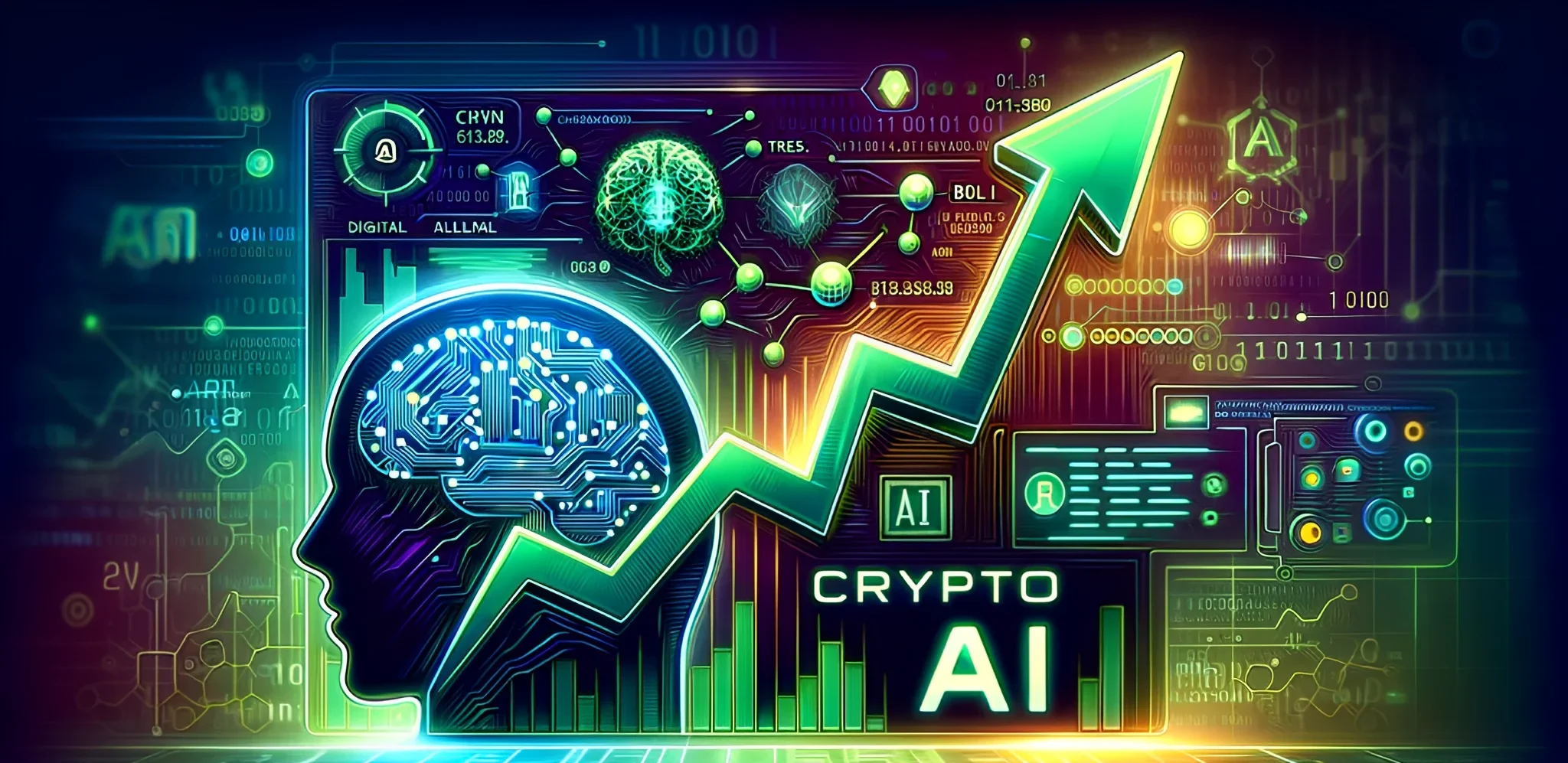
The Netscape comparison is useful because it reminds us that transformative technology is often about accessibility rather than invention alone.
The internet existed before Netscape. Artificial intelligence existed before today’s generative AI boom. Cryptographic currencies existed before today’s blockchain ecosystem.
What changes the trajectory is often the moment when complex infrastructure becomes easy enough for millions of people to use.
AI agents could become that bridge.
If developers successfully create agents that are reliable, secure, useful, and easy to control, they could turn advanced AI capabilities into everyday digital services.
Crypto could provide another piece of the infrastructure by enabling programmable ownership and payments.
That is why the AI and crypto Netscape moment is worth watching.
Conclusion
The idea that agents present a Netscape moment for AI and crypto is ultimately a hypothesis about where the internet may be heading.
AI agents could transform software from something users operate into something that actively works on their behalf. Crypto could provide infrastructure for payments, ownership, identity, incentives, and machine-to-machine transactions. The combination could create a new digital economy in which autonomous software participates in commerce at a scale that would be difficult to manage manually.
But the opportunity comes with serious challenges. Security, regulation, scalability, privacy, trust, and usability must all improve before autonomous agents can become mainstream economic participants.
The most important lesson from previous technology revolutions is that adoption does not happen simply because a technology is powerful. It happens when that technology becomes useful, accessible, reliable, and easy to understand.
If AI agents reach that point, they could become a new interface for the internet. And if crypto networks successfully provide the economic infrastructure those agents need, the resulting convergence could become one of the most significant developments in digital technology.
FAQs
Q1. What is the AI and crypto Netscape moment?
The AI and crypto Netscape moment refers to the possibility that AI agents could make artificial intelligence and blockchain-based services significantly more accessible and useful. Like the web browser helped bring the internet to mainstream users, AI agents could become an intuitive interface for interacting with digital services, while crypto provides potential infrastructure for payments, ownership, and automated transactions.
Q2. Why are AI agents important for the future of crypto?
AI agents could create demand for automated digital transactions. An agent may eventually need to purchase computing resources, data, software services, or other digital products without requiring a human to approve every individual transaction. Programmable payments and blockchain-based systems could potentially support these interactions.
Q3. How could AI agents use cryptocurrency?
AI agents could potentially use digital wallets or other payment mechanisms to purchase services, access resources, participate in decentralized marketplaces, or interact with smart contracts. The exact implementation will depend on technological development, regulation, security standards, and user adoption.
Q4. Could AI agents replace traditional websites and applications?
They are unlikely to eliminate websites and applications entirely. Instead, AI agents could become an additional layer between users and digital services. Users may increasingly tell an agent what outcome they want while the agent interacts with websites, APIs, applications, and marketplaces behind the scenes.
Q5. What could stop the AI and crypto Netscape moment from happening?
Security vulnerabilities, regulatory uncertainty, high transaction costs, poor user experience, unreliable AI decision-making, privacy concerns, and limited scalability could slow adoption. For the convergence to reach its full potential, AI agents and crypto infrastructure must become substantially more trustworthy, affordable, and user-friendly.