


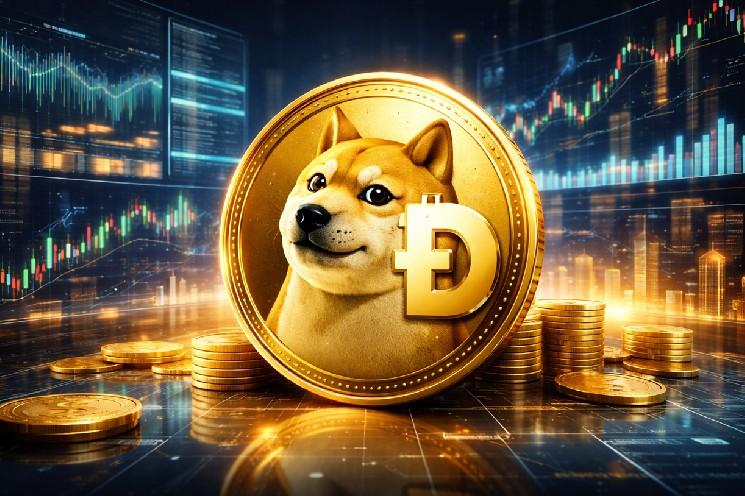
Dogecoin (DOGE) is one of the most recognizable cryptocurrencies in the digital asset market, known for its Shiba Inu dog logo, strong online community, and unusual journey from an internet joke to a widely discussed digital currency. Unlike many cryptocurrency projects that were introduced with complicated technical objectives or ambitious financial roadmaps, Dogecoin began as a lighthearted experiment designed to make cryptocurrency more approachable and entertaining. Over time, however, it developed into a functioning peer-to-peer payment network with its own blockchain, mining infrastructure, and growing ecosystem of users. Its popularity demonstrates how online communities, technology, and cultural trends can influence the development and adoption of digital assets.
As the cryptocurrency industry continues to evolve in 2026, Dogecoin remains an interesting example of the relationship between digital payments, decentralized networks, social media influence, and speculative investment. Although DOGE is frequently described as a meme coin, it is important to understand that the project operates through established blockchain technology rather than existing solely as an internet trend. This guide explores what Dogecoin is, how its network functions, why it became popular, how it differs from Bitcoin, and which opportunities and risks users should consider before purchasing or using DOGE.

What Is Dogecoin (DOGE)?
Dogecoin is an open-source, decentralized cryptocurrency that allows users to send and receive digital payments directly over a blockchain network. Its native currency, DOGE, can be transferred between compatible cryptocurrency wallets without requiring a traditional bank to process the transaction. Like other blockchain-based currencies, Dogecoin relies on a distributed network of computers to verify transactions, maintain transaction records, and enforce the rules governing the creation and movement of coins. Transactions are publicly recorded on its blockchain, allowing users to inspect activity through compatible blockchain explorers.
Dogecoin was designed to be accessible, community-oriented, and practical for everyday transfers. It is especially associated with online tipping, donations, and digital payments, although its actual acceptance depends on the merchants, platforms, and services supporting DOGE. Unlike tokens issued on another blockchain, native DOGE operates on its own independent network. This distinction is important because users must select the correct network when transferring funds between wallets or exchanges. Sending assets through an unsupported network can result in lost funds or a complicated recovery process.
The History and Creation of Dogecoin
Dogecoin was launched on December 6, 2013, by software developers Billy Markus and Jackson Palmer. The cryptocurrency emerged during a period when Bitcoin and other early digital currencies were attracting increasing attention, but public discussions about cryptocurrency were often highly technical or focused on financial speculation. Markus and Palmer combined elements of existing cryptocurrency technology with the popular Doge internet meme, which featured a Shiba Inu dog and humorous captions. Their intention was to create a more approachable digital currency that people could enjoy using and discussing without treating every interaction as a serious financial investment.
The project quickly attracted interest from internet communities, particularly users who enjoyed sharing memes, experimenting with cryptocurrency, and rewarding creators through small digital tips. Dogecoin also became associated with charitable fundraising initiatives, including community support for the Jamaican bobsled team in 2014 and clean-water projects in Kenya. These activities helped establish a recognizable community identity based on participation, generosity, and online collaboration. Although the original founders eventually stepped away from active development, independent contributors continued maintaining the software and supporting the network. Dogecoin’s longevity illustrates how an open-source project can continue evolving through community participation beyond the involvement of its original creators.
How Does Dogecoin Work?
Dogecoin operates using blockchain technology, which records transactions in a distributed digital ledger maintained by independent network participants. When someone sends DOGE to another wallet, the transaction is broadcast to the network, where participating nodes check whether it follows the protocol’s rules. These checks help prevent invalid transfers, including attempts to spend coins that the sender does not control. Miners then compete to create new blocks containing eligible transactions, while other nodes independently validate the resulting blocks before accepting them into their view of the blockchain.
The network uses a Proof-of-Work consensus mechanism based on the Scrypt hashing algorithm. This means miners perform computational work to help secure the blockchain and produce valid blocks. Dogecoin targets an average block interval of approximately one minute, although individual blocks can arrive faster or slower. Compared with Bitcoin’s approximately ten-minute target interval, Dogecoin generally provides more frequent opportunities for transaction confirmations. However, confirmation speed does not automatically guarantee that a payment is irreversible or risk-free. The level of confirmation required depends on the value of the transaction, the recipient’s risk tolerance, and the policies of any exchange or payment service involved.
Dogecoin’s Proof-of-Work Mining System
Mining is essential to the operation of Dogecoin because miners help process transactions and protect the network against attempts to rewrite its transaction history. Dogecoin miners use computing equipment designed for the Scrypt algorithm to compete for block rewards. The network currently awards 10,000 newly created DOGE for each valid block, along with the transaction fees associated with transactions included in that block. Mining profitability is not determined by the reward alone; it also depends on electricity prices, hardware efficiency, mining difficulty, pool fees, and the market value of DOGE.
An important feature of Dogecoin mining is its compatibility with merged mining, which allows miners to contribute work to Dogecoin and compatible Scrypt-based cryptocurrencies such as Litecoin. This arrangement can help miners use existing equipment across multiple networks. Individuals interested in mining DOGE should understand that modern mining generally requires specialized ASIC hardware, making profitable participation more demanding than simply running mining software on an ordinary laptop.
Dogecoin Tokenomics and Supply
One of the most important differences between Dogecoin and Bitcoin is their monetary supply structure. Bitcoin has a maximum supply limit of 21 million coins, while Dogecoin does not have a fixed maximum lifetime supply. Instead, Dogecoin follows a predictable issuance schedule in which miners receive 10,000 new DOGE for each block. With an average target of one block per minute, this results in approximately 5.256 billion new DOGE annually, assuming the expected block production rate. The exact amount produced during a calendar period can differ slightly because real block intervals vary.
Dogecoin’s supply model is often described as inflationary because additional coins continually enter circulation. However, its fixed nominal issuance means that the percentage increase in the total supply generally becomes smaller as the existing supply grows. This model was not designed to make DOGE scarce in the same way as Bitcoin. Instead, ongoing issuance provides block rewards intended to incentivize miners and help support network security. Investors evaluating Dogecoin should understand that future market prices depend on the relationship between demand, available supply, liquidity, and broader market conditions rather than supply scarcity alone.
Why Is Dogecoin So Popular?
Dogecoin’s popularity comes from a combination of recognizable branding, community participation, exchange accessibility, and its association with internet culture. The Shiba Inu logo makes the cryptocurrency instantly recognizable, while its informal communication style has historically attracted people who might otherwise find cryptocurrency intimidating. Online communities helped Dogecoin develop a strong identity, encouraging users to share educational material, participate in charitable campaigns, and experiment with small digital transactions. This community-centered approach helped Dogecoin distinguish itself from cryptocurrency projects focused primarily on institutional financial applications or complex blockchain infrastructure.
Social media discussions and statements by influential public figures have also contributed to periods of heightened interest in Dogecoin. These events sometimes create rapid increases in trading volume, followed by equally dramatic price corrections when attention fades. The resulting market activity has reinforced Dogecoin’s reputation as a speculative asset. Nevertheless, online popularity should not be confused with sustainable adoption, reliable returns, or technological superiority. Long-term relevance depends on factors such as network security, accessible wallets, practical payment integrations, continued development, and genuine demand for the currency.
Real-World Uses of Dogecoin
Dogecoin can be used for several activities involving digital payments and peer-to-peer transfers. One established use is online tipping, in which individuals send small amounts of DOGE to content creators, community members, or other recipients. Its relatively short target block time and typically modest transaction fees can make DOGE suitable for some smaller payments, although fees and settlement requirements vary. Users may also transfer DOGE between supported wallets, donate it to organizations that accept cryptocurrency, or pay participating merchants directly or through payment processors.
Dogecoin’s usefulness as a payment method depends heavily on actual merchant acceptance and the availability of reliable supporting infrastructure. A cryptocurrency may function technically as a payment network without being accepted by most businesses. Users should therefore check whether a merchant explicitly supports native DOGE and confirm the required payment instructions before making a transfer. Because cryptocurrencies can experience significant price changes, both customers and merchants may face exchange-rate risk between the time a payment is initiated and the time its value is converted into local currency.
Dogecoin vs Bitcoin: Key Differences
Dogecoin and Bitcoin both operate through independent blockchain networks secured by Proof-of-Work mining, but they have different monetary policies, technical characteristics, and market identities. Bitcoin is widely associated with digital scarcity and its fixed maximum supply, while Dogecoin emphasizes accessible transfers, community participation, and an ongoing issuance schedule. Bitcoin targets approximately ten minutes between blocks, compared with Dogecoin’s approximately one-minute target. The networks also use different mining algorithms: Bitcoin uses SHA-256, while Dogecoin uses Scrypt.
These differences do not establish that one cryptocurrency is automatically better for every purpose. Bitcoin has a different monetary design and a wider set of established institutional financial products, while Dogecoin’s characteristics may appeal to people interested in smaller payments and community-driven applications. Both cryptocurrencies remain exposed to market volatility, transaction security considerations, custody risks, and evolving regulations. Users should compare their individual requirements instead of assuming that faster block production or a smaller unit price necessarily makes one asset a superior investment.
Is Dogecoin a Good Investment in 2026?
Whether Dogecoin is a suitable investment depends on an individual’s financial situation, risk tolerance, investment timeframe, and understanding of cryptocurrency markets. DOGE has experienced periods of extraordinary public attention, but historical price increases do not establish predictable future returns. Its value can be influenced by broad cryptocurrency market sentiment, liquidity conditions, speculative trading, exchange availability, influential commentary, and changes in demand for digital assets. Unlike shares in a business, holding DOGE does not provide ownership of company earnings, dividends, or a contractual claim on underlying productive assets.
Before considering an investment, users should examine Dogecoin’s supply model, network activity, security characteristics, exchange liquidity, and real-world adoption. Investors should also distinguish between short-term speculation and long-term ownership. Speculative trading may expose participants to rapid price swings and execution risks, particularly when using leverage. Long-term ownership avoids some frequent-trading costs but does not eliminate the possibility of substantial losses. There is no reliable basis for guaranteeing that DOGE will reach a particular price in 2026 or any later year, and decisions should not depend solely on social media forecasts or promotional claims.
Major Risks of Buying Dogecoin
Price volatility is among the most significant risks associated with Dogecoin. Demand can change rapidly, especially when market activity is driven by speculative attention rather than practical usage. Large price movements may occur without corresponding changes to the underlying blockchain technology. Dogecoin’s continuing coin issuance also means that new supply enters the market regularly, requiring sustained demand to support any particular valuation. Although predictable issuance is an established feature of its protocol, investors must account for it when assessing long-term price expectations.
Security and custody present additional concerns. Cryptocurrency transactions can be difficult or impossible to reverse after confirmation, and users may lose their funds through phishing, fraudulent platforms, malicious wallet applications, incorrect addresses, or compromised private keys. Custodial exchanges introduce risks related to account restrictions, security breaches, and the financial condition of the service provider. Regulatory developments may also influence market access and the availability of cryptocurrency services across different jurisdictions. Understanding these risks is essential before committing funds that might be needed for important financial obligations.
How to Buy Dogecoin Safely
People who want to purchase Dogecoin can begin by researching cryptocurrency exchanges that legally operate in their jurisdiction and support DOGE trading. Important considerations include platform security, trading fees, withdrawal charges, liquidity, regulatory status, and available payment methods. After creating an account, users may need to complete identity verification, enable two-factor authentication, and deposit funds through an accepted payment method. They can then review the relevant DOGE trading pair and place an order after checking the quoted price, applicable fees, and order details.
Buying cryptocurrency is only one part of responsible asset management. Users must also decide whether to leave funds with a custodial service or transfer them to a compatible self-custody wallet. Before withdrawing DOGE, it is important to verify the destination address and supported blockchain network carefully. Sending a small test transaction can help confirm that a receiving wallet is correctly configured, particularly when moving a significant amount. No exchange or wallet should be assumed to be completely risk-free, and users should avoid platforms promising guaranteed cryptocurrency profits.
How to Store Dogecoin Securely
Dogecoin can be stored through custodial accounts or self-custody wallets, depending on the level of control and responsibility a user prefers. Custodial services manage private keys on behalf of customers, making access convenient but introducing dependence on the service provider. With self-custody, users control the cryptographic credentials needed to access and transfer their funds. Software wallets can provide convenient access for regular transactions, while supported hardware wallets may offer additional protection by keeping signing credentials isolated from ordinary internet-connected environments.
Anyone using self-custody should securely back up their wallet recovery information, protect their devices, and avoid sharing private keys or recovery phrases with other people. Fraudulent support representatives and imitation wallet websites frequently attempt to steal this information. Users should obtain wallet software through trustworthy official sources, verify compatibility with native Dogecoin, and follow the developer’s backup instructions. Wallet selection should reflect the amount being stored, expected transaction frequency, recovery requirements, and the individual’s ability to maintain secure backups.
The Future of Dogecoin
Dogecoin’s future will depend on more than its popularity as a meme coin. Continued software maintenance, reliable network infrastructure, merchant integrations, user education, and practical payment services can all influence its long-term relevance. Its open-source development model allows independent contributors to improve network software and build applications without requiring permission from a single company. The surrounding ecosystem may expand through wallet integrations, payment solutions, and additional services, although proposed developments should not be treated as completed achievements until they can be independently verified.
Market conditions will remain an important influence on Dogecoin’s valuation. Broader cryptocurrency adoption could create opportunities for digital payment networks, while weaker demand, unfavorable regulations, technological competition, or reduced speculative interest could present challenges. DOGE’s predictable issuance structure and established mining system provide continuity at the protocol level, but neither feature guarantees future adoption or price appreciation. For readers evaluating Dogecoin in 2026, the most useful approach is to monitor verifiable developments, actual network activity, payment adoption, and credible technical updates rather than relying exclusively on optimistic price predictions.
FAQs
1. What is Dogecoin used for?
Dogecoin is primarily used for peer-to-peer cryptocurrency transfers, online tipping, donations, and payments where merchants or payment processors accept DOGE. It also trades on cryptocurrency exchanges as a speculative digital asset.
2. Who created Dogecoin?
Dogecoin was created by software developers Billy Markus and Jackson Palmer and officially launched on December 6, 2013. It was inspired by the popular Doge internet meme.
3. Does Dogecoin have a maximum supply?
No. Dogecoin has no fixed maximum lifetime supply. Its protocol currently awards 10,000 new DOGE per block, resulting in approximately 5.256 billion additional DOGE annually at the expected block production rate.
4. Can Dogecoin reach $1?
Dogecoin could theoretically trade at $1 if market demand and liquidity supported that valuation, but there is no guarantee it will do so. Its circulating supply, market capitalization, trading conditions, and broader economic environment must all be considered.
5. Is Dogecoin better than Bitcoin?
Dogecoin and Bitcoin serve different preferences and use cases. Dogecoin targets faster block intervals and has ongoing issuance, while Bitcoin has a capped supply and a different monetary design. Neither is automatically better for every user.
6. Can you mine Dogecoin?
Yes. Dogecoin uses Scrypt-based Proof-of-Work mining and supports merged mining with compatible networks. Competitive mining commonly requires specialized ASIC equipment and access to affordable electricity.
7. Is Dogecoin safe to buy?
Dogecoin operates on an established blockchain, but purchasing it involves market volatility, custody risks, scams, and possible financial losses. Users should evaluate exchanges carefully and protect their wallet credentials.
8. Is Dogecoin a good long-term investment?
Dogecoin may interest investors who understand speculative cryptocurrency markets, but its future performance is uncertain. There is no guaranteed return, and its suitability depends on personal finances, risk tolerance, and investment goals.
Conclusion
Dogecoin (DOGE) represents a distinctive part of cryptocurrency history, showing how an internet joke can develop into an established blockchain-based digital currency supported by a committed community. Since its launch in 2013, Dogecoin has remained recognizable through its approachable branding, open-source technology, relatively frequent block production, and use in online payments and tipping. Understanding its Proof-of-Work consensus mechanism, ongoing coin issuance, wallet infrastructure, and mining ecosystem provides a clearer view of the project beyond the headlines and memes commonly associated with it.
For anyone researching Dogecoin in 2026, the most important lesson is to separate its technical functionality from expectations about future market prices. DOGE can serve as a digital payment asset, but it also carries substantial volatility and security risks. Readers should prioritize reliable information, protect their private keys, review current market conditions independently, and avoid treating speculative forecasts as financial guarantees. Whether Dogecoin experiences broader adoption or remains primarily community-driven will depend on its continued development, practical utility, and the decisions of users across the cryptocurrency ecosystem.
Disclaimer: This article is provided for general educational and informational purposes only. It does not constitute financial, investment, tax, or legal advice. Cryptocurrency investments are volatile, and readers should conduct independent research or consult a qualified professional before making financial decisions.